 Add to Chrome
 Add to Firefox
 Add to Edge
LoKA: Low-precision Kernel Applications for Recommendation Models At Scale
May 11, 2026
Recent GPU generations deliver significantly higher FLOPs using lower-precision arithmetic, such as FP8. While successfully applied to large language models (LLMs), its adoption in large recommendation models (LRMs) has been limited. This is because LRMs are numerically sensitive, dominated by small matrix multiplications (GEMMs) followed by normalization, and trained in communication-intensive environments. Applying FP8 directly to LRMs often degrades model quality and prolongs training time. These challenges are inherent to LRM workloads and cannot be resolved merely by introducing better FP8 kernels. Instead, a system-model co-design approach is needed to successfully integrate FP8. We present LoKA (Low-precision Kernel Applications), a framework that makes FP8 practical for LRMs through three principles: profile under realistic distributions to know where low precision is safe, co-design model components with hardware to expand where it is safe, and orchestrate across kernel libraries to maximize the gains. Concretely, LoKA Probe is a statistically grounded, online benchmarking method that learns activation and weight statistics, and quantifies per-layer errors. This process pinpoints safe and unsafe, fast and slow sites for FP8 adoption. LoKA Mods is a set of reusable model adaptations that improve both numerical stability and execution efficiency with FP8. LoKA Dispatch is a runtime that leverages the statistical insights from LoKA Probe to select the fastest FP8 kernel that satisfies the accuracy requirements.

FreeScale: Distributed Training for Sequence Recommendation Models with Minimal Scaling Cost
Apr 27, 2026Modern industrial Deep Learning Recommendation Models typically extract user preferences through the analysis of sequential interaction histories, subsequently generating predictions based on these derived interests. The inherent heterogeneity in data characteristics frequently result in substantial under-utilization of computational resources during large-scale training, primarily due to computational bubbles caused by severe stragglers and slow blocking communications. This paper introduces FreeScale, a solution designed to (1) mitigate the straggler problem through meticulously load balanced input samples (2) minimize the blocking communication by overlapping prioritized embedding communications with computations (3) resolve the GPU resource competition during computation and communication overlapping by communicating through SM-Free techniques. Empirical evaluation demonstrates that FreeScale achieves up to 90.3% reduction in computational bubbles when applied to real-world workloads running on 256 H100 GPUs.
SOLARIS: Speculative Offloading of Latent-bAsed Representation for Inference Scaling
Apr 13, 2026Recent advances in recommendation scaling laws have led to foundation models of unprecedented complexity. While these models offer superior performance, their computational demands make real-time serving impractical, often forcing practitioners to rely on knowledge distillation-compromising serving quality for efficiency. To address this challenge, we present SOLARIS (Speculative Offloading of Latent-bAsed Representation for Inference Scaling), a novel framework inspired by speculative decoding. SOLARIS proactively precomputes user-item interaction embeddings by predicting which user-item pairs are likely to appear in future requests, and asynchronously generating their foundation model representations ahead of time. This approach decouples the costly foundation model inference from the latency-critical serving path, enabling real-time knowledge transfer from models previously considered too expensive for online use. Deployed across Meta's advertising system serving billions of daily requests, SOLARIS achieves 0.67% revenue-driving top-line metrics gain, demonstrating its effectiveness at scale.
Implicit Turn-Wise Policy Optimization for Proactive User-LLM Interaction
Mar 21, 2026Multi-turn human-AI collaboration is fundamental to deploying interactive services such as adaptive tutoring, conversational recommendation, and professional consultation. However, optimizing these interactions via reinforcement learning is hindered by the sparsity of verifiable intermediate rewards and the high stochasticity of user responses. To address these challenges, we introduce Implicit Turn-wise Policy Optimization (ITPO). ITPO leverages an implicit process reward model to derive fine-grained, turn-wise process rewards from sparse outcome signals. Unlike volatile token-level rewards, these turn-level signals exhibit superior robustness and may utilize a normalization mechanism to further enhance training stability. We evaluate ITPO across three representative multi-turn collaborative tasks: math tutoring, document writing, and medical recommendation. Empirical results demonstrate that ITPO, when combined with PPO, GRPO, or RLOO, consistently achieves improved convergence than existing baselines. Elaborate trajectory analysis confirms that ITPO infers turn-wise preferences that are semantically aligned with human judgment. Code is publicly available at https://github.com/Graph-COM/ITPO.
Meta Lattice: Model Space Redesign for Cost-Effective Industry-Scale Ads Recommendations
Dec 15, 2025The rapidly evolving landscape of products, surfaces, policies, and regulations poses significant challenges for deploying state-of-the-art recommendation models at industry scale, primarily due to data fragmentation across domains and escalating infrastructure costs that hinder sustained quality improvements. To address this challenge, we propose Lattice, a recommendation framework centered around model space redesign that extends Multi-Domain, Multi-Objective (MDMO) learning beyond models and learning objectives. Lattice addresses these challenges through a comprehensive model space redesign that combines cross-domain knowledge sharing, data consolidation, model unification, distillation, and system optimizations to achieve significant improvements in both quality and cost-efficiency. Our deployment of Lattice at Meta has resulted in 10% revenue-driving top-line metrics gain, 11.5% user satisfaction improvement, 6% boost in conversion rate, with 20% capacity saving.
Hybrid Architectures for Language Models: Systematic Analysis and Design Insights
Oct 06, 2025Recent progress in large language models demonstrates that hybrid architectures--combining self-attention mechanisms with structured state space models like Mamba--can achieve a compelling balance between modeling quality and computational efficiency, particularly for long-context tasks. While these hybrid models show promising performance, systematic comparisons of hybridization strategies and analyses on the key factors behind their effectiveness have not been clearly shared to the community. In this work, we present a holistic evaluation of hybrid architectures based on inter-layer (sequential) or intra-layer (parallel) fusion. We evaluate these designs from a variety of perspectives: language modeling performance, long-context capabilities, scaling analysis, and training and inference efficiency. By investigating the core characteristics of their computational primitive, we identify the most critical elements for each hybridization strategy and further propose optimal design recipes for both hybrid models. Our comprehensive analysis provides practical guidance and valuable insights for developing hybrid language models, facilitating the optimization of architectural configurations.
SSG-Dit: A Spatial Signal Guided Framework for Controllable Video Generation
Aug 23, 2025Controllable video generation aims to synthesize video content that aligns precisely with user-provided conditions, such as text descriptions and initial images. However, a significant challenge persists in this domain: existing models often struggle to maintain strong semantic consistency, frequently generating videos that deviate from the nuanced details specified in the prompts. To address this issue, we propose SSG-DiT (Spatial Signal Guided Diffusion Transformer), a novel and efficient framework for high-fidelity controllable video generation. Our approach introduces a decoupled two-stage process. The first stage, Spatial Signal Prompting, generates a spatially aware visual prompt by leveraging the rich internal representations of a pre-trained multi-modal model. This prompt, combined with the original text, forms a joint condition that is then injected into a frozen video DiT backbone via our lightweight and parameter-efficient SSG-Adapter. This unique design, featuring a dual-branch attention mechanism, allows the model to simultaneously harness its powerful generative priors while being precisely steered by external spatial signals. Extensive experiments demonstrate that SSG-DiT achieves state-of-the-art performance, outperforming existing models on multiple key metrics in the VBench benchmark, particularly in spatial relationship control and overall consistency.
Phantora: Live GPU Cluster Simulation for Machine Learning System Performance Estimation
May 02, 2025To accommodate ever-increasing model complexity, modern machine learning (ML) systems have to scale to large GPU clusters. Changes in ML model architecture, ML system implementation, and cluster configuration can significantly affect overall ML system performance. However, quantifying the performance impact before deployment is challenging. Existing performance estimation methods use performance modeling or static workload simulation. These techniques are not general: they requires significant human effort and computation capacity to generate training data or a workload. It is also difficult to adapt ML systems to use these techniques. This paper introduces, Phantora, a live GPU cluster simulator for performance estimation. Phantora runs minimally modified ML models and frameworks, intercepting and simulating GPU-related operations to enable high-fidelity performance estimation. Phantora overcomes several research challenges in integrating an event-driven network simulator with live system execution, and introduces a set of techniques to improve simulation speed, scalability, and accuracy. Our evaluation results show that Phantora can deliver similar estimation accuracy to the state-of-the-art workload simulation approach with only one GPU, while reducing human effort and increasing generalizability.
External Large Foundation Model: How to Efficiently Serve Trillions of Parameters for Online Ads Recommendation
Feb 26, 2025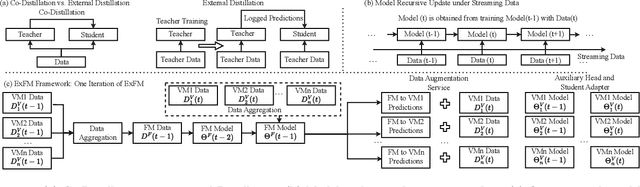
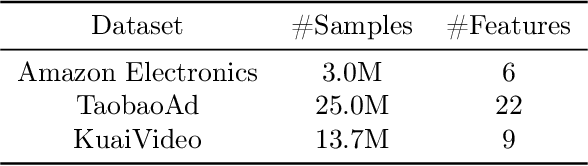
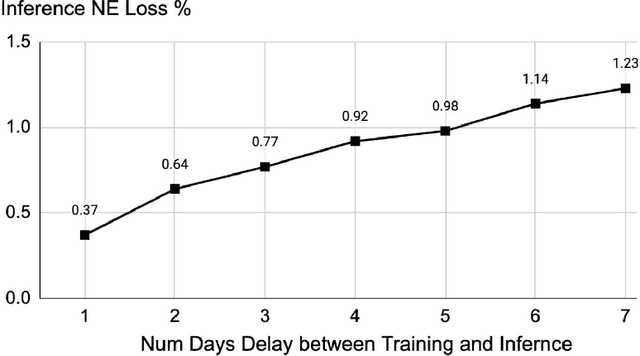
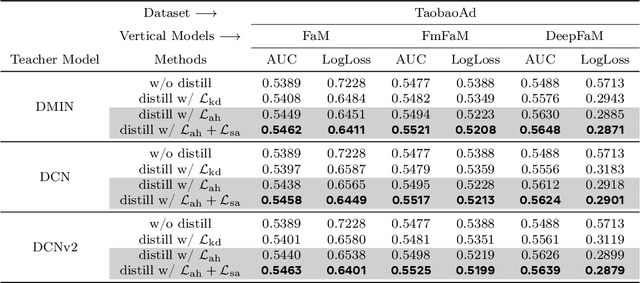
Ads recommendation is a prominent service of online advertising systems and has been actively studied. Recent studies indicate that scaling-up and advanced design of the recommendation model can bring significant performance improvement. However, with a larger model scale, such prior studies have a significantly increasing gap from industry as they often neglect two fundamental challenges in industrial-scale applications. First, training and inference budgets are restricted for the model to be served, exceeding which may incur latency and impair user experience. Second, large-volume data arrive in a streaming mode with data distributions dynamically shifting, as new users/ads join and existing users/ads leave the system. We propose the External Large Foundation Model (ExFM) framework to address the overlooked challenges. Specifically, we develop external distillation and a data augmentation system (DAS) to control the computational cost of training/inference while maintaining high performance. We design the teacher in a way like a foundation model (FM) that can serve multiple students as vertical models (VMs) to amortize its building cost. We propose Auxiliary Head and Student Adapter to mitigate the data distribution gap between FM and VMs caused by the streaming data issue. Comprehensive experiments on internal industrial-scale applications and public datasets demonstrate significant performance gain by ExFM.
The Efficiency vs. Accuracy Trade-off: Optimizing RAG-Enhanced LLM Recommender Systems Using Multi-Head Early Exit
Jan 04, 2025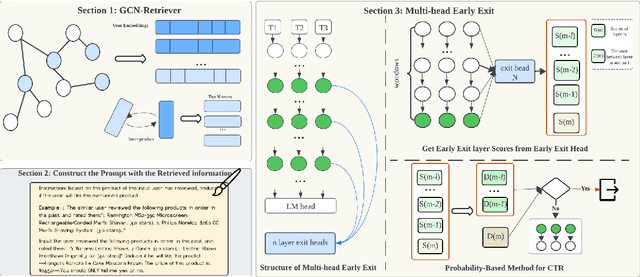
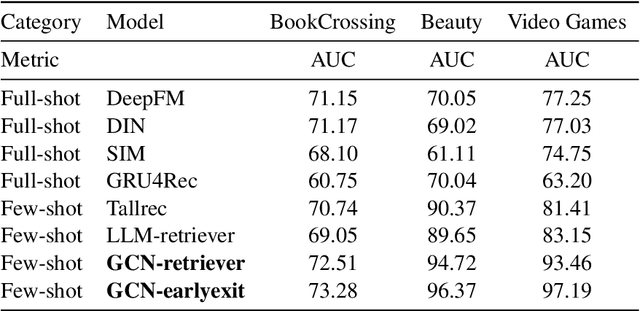
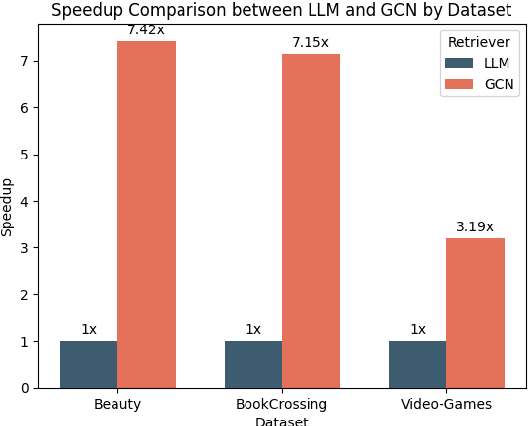
The deployment of Large Language Models (LLMs) in recommender systems for predicting Click-Through Rates (CTR) necessitates a delicate balance between computational efficiency and predictive accuracy. This paper presents an optimization framework that combines Retrieval-Augmented Generation (RAG) with an innovative multi-head early exit architecture to concurrently enhance both aspects. By integrating Graph Convolutional Networks (GCNs) as efficient retrieval mechanisms, we are able to significantly reduce data retrieval times while maintaining high model performance. The early exit strategy employed allows for dynamic termination of model inference, utilizing real-time predictive confidence assessments across multiple heads. This not only quickens the responsiveness of LLMs but also upholds or improves their accuracy, making it ideal for real-time application scenarios. Our experiments demonstrate how this architecture effectively decreases computation time without sacrificing the accuracy needed for reliable recommendation delivery, establishing a new standard for efficient, real-time LLM deployment in commercial systems.